African Celebrations
Rhythms, drums, and joyful praise
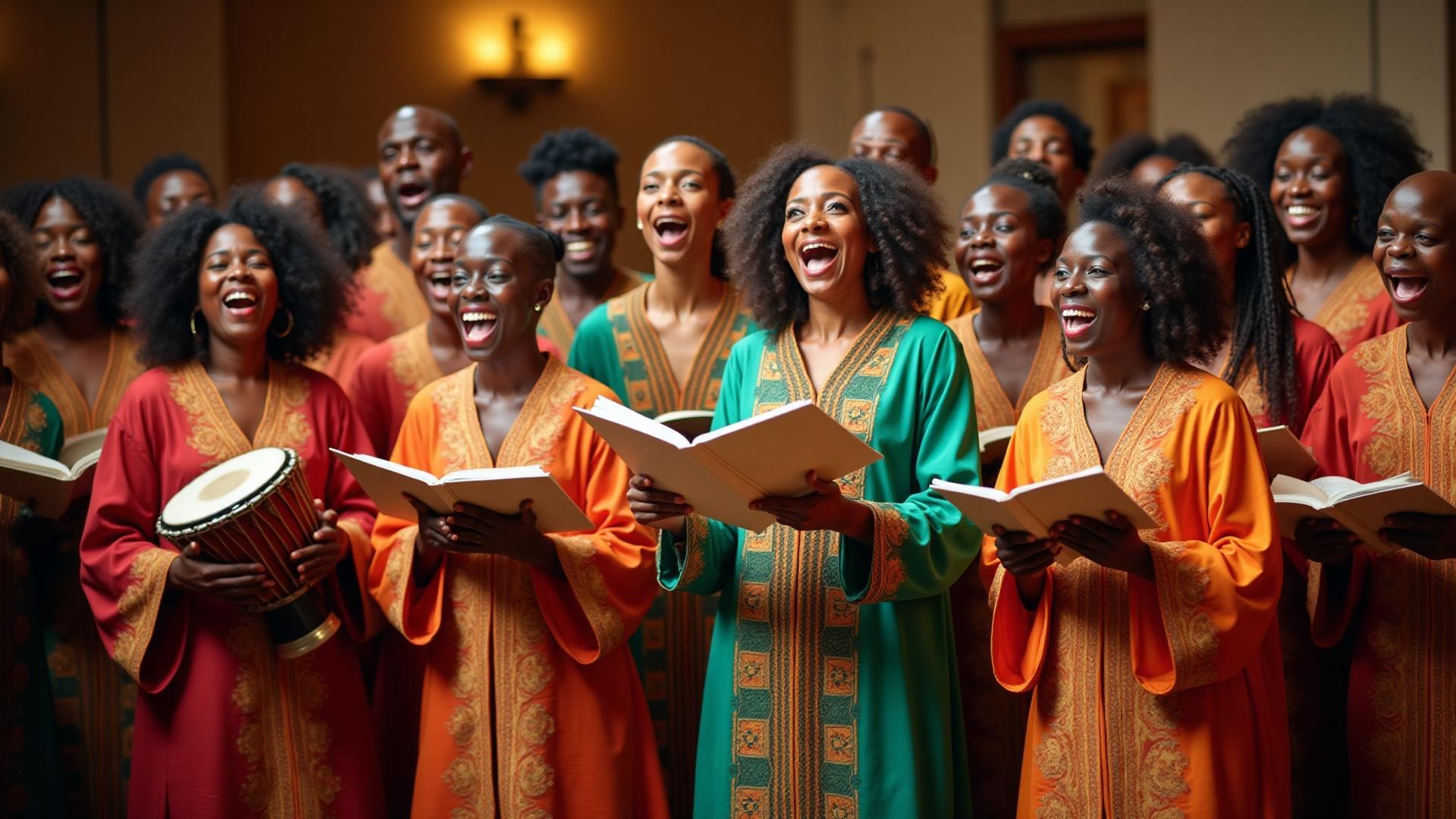
Across the African continent, carols and Christmas music have been joyfully incorporated into worship, often with distinctive rhythms, languages, and instruments. Many African churches hold Carol Nights or Nine Lessons and Carols in the week leading up to Christmas, but the music might be accompanied by drums, kora (in West Africa), or marimbas (in parts of Southern Africa).
Nigeria & West Africa
In Nigeria, carol gatherings can be huge; there's also a flair for Gospel-style carol renditions – one might hear a choir belting out "Angels We Have Heard" with high-energy call-and-response. The world record for the largest carol service ever officially recorded was set in Nigeria, where a choir of 25,272 carolers sang together in Akwa Ibom State in 2014.
West African carol services often feature the distinctive sounds of drums and the kora, a 21-string lute-bridge-harp, adding a uniquely African flavor to familiar melodies.
South Africa
In South Africa, "Carols by Candlelight" events in parks are popular (a nod to the Australian tradition), sometimes featuring songs in multiple languages – English, Zulu, Afrikaans, Xhosa – reflecting the Rainbow Nation. For instance, "Silent Night" might be sung verse by verse in English, Afrikaans (Stille Nag), and Xhosa (Cula Ezulwini).
The harmony-rich singing traditions of African communities make carols sound particularly rich – think of the famous African chorale sound of groups like the Soweto Gospel Choir, who perform carols with that full, soulful sound.
Ethiopia
In Ethiopia, Christmas (observed on January 7 by their calendar) has its own ancient chants, but Western carols are also known; children might sing "Letsehaleyon Yom" (Joy to the World in Amharic) in school pageants. The Ethiopian Orthodox tradition brings unique liturgical chants and processions to the Christmas celebration.
A Cross-Cultural Carol
One delightful cross-cultural carol example: "Mary's Boy Child" – written by Jester Hairston (an African-American composer) – became a worldwide hit through Harry Belafonte's calypso rendition. Now it's often included in Caribbean and African Christmas services. The syncopated, island feel of that song shows how a carol can be distinctly local (calypso from the Caribbean) yet universally loved.